
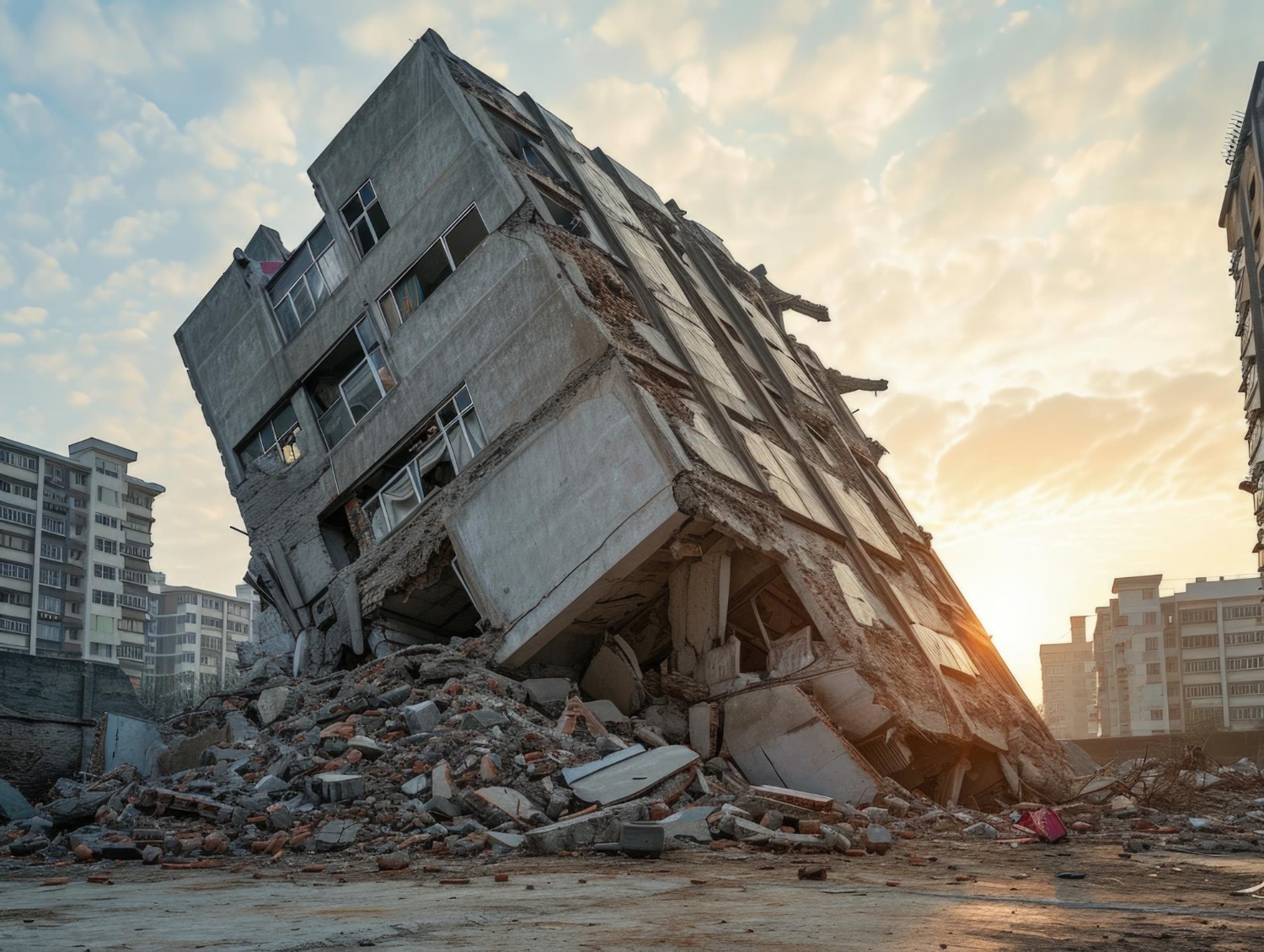
You probably didn’t expect to wake up this morning and read about another powerful earthquake shaking the Philippines. But here we are again, watching this resilient nation face yet another devastating blow.
On October 10, 2025, a massive 7.4-magnitude earthquake struck the southern part of the country, jolting the region awake and triggering tsunami warnings that spread panic across coastal communities.
If you’ve been following the Philippines Earthquake for a while, you know this isn’t the first time — and sadly, it won’t be the last. Let’s talk about what really happened, why this nation seems to be constantly hit by one disaster after another, and what this means for millions of people living in one of the most disaster-prone places on Earth.
The Morning the Ground Wouldn’t Stop Moving
Imagine this. It’s just a normal Friday morning in Davao Oriental. Kids are getting ready for school, coffee pots are brewing, and offices are coming to life. Then, without warning, the floor starts to rumble. At first, it’s a soft shake, the kind that makes you pause mid-sentence. But within seconds, it grows violent. Buildings sway, windows rattle, and fear spreads faster than the tremor itself.
At exactly 9:43 AM, a powerful earthquake hit offshore, about 24 kilometers east of Manay in Davao Oriental province. To put it in perspective, any quake above magnitude 7 is serious — this one was strong enough to rip cracks into walls, knock over structures, and send entire neighborhoods fleeing for their lives.
People ran out of schools and hospitals, clutching loved ones and praying the shaking would stop. Power lines went down. The sound of alarms and cries filled the air. And then came the tsunami warnings — the kind of message that stops your heartbeat for a second.
Thousands rushed to higher ground, terrified that waves might come crashing in. Thankfully, the warnings were lifted later, but those moments of uncertainty were pure terror.
By evening, the reports began trickling in — two people dead, hundreds injured, and entire communities in ruins. More than 170 aftershocks followed, some strong enough to make the ground feel like it was breathing beneath people’s feet. No one slept peacefully that night.

Why the Philippines Seems to Be Constantly Tested
If you’ve ever wondered why the Philippines faces so many earthquakes and natural disasters, the answer lies deep beneath the ocean — literally.
This country sits smack in the middle of what scientists call the Pacific Ring of Fire, a massive horseshoe-shaped zone around the Pacific Ocean that’s home to about 90 percent of the world’s earthquakes. Picture it as Earth’s fault line neighborhood — and the Philippines happens to be right in the middle of the action.
Here’s a mind-blowing fact: the Philippines experiences around 20 earthquakes every single day. Most are so small that people don’t even feel them. But every few years, one comes along that changes everything.
The reason? The Philippine Sea Plate and the Eurasian Plate are constantly pushing, grinding, and sliding against each other beneath the surface. It’s like an endless tug-of-war between two giant slabs of rock. And when that tension releases, the ground moves — violently.
What makes this even harder is that, despite all our science and technology, earthquakes can’t be predicted. Scientists can identify high-risk areas, but they can’t say when it will happen. It’s like living with an unpredictable enemy — you know it’s out there, but you never know when it’ll strike.
A Country Already on Its Knees
What makes this latest quake even more heartbreaking is the timing. The Philippines hasn’t even recovered from the last one.
Just ten days earlier, on September 30, 2025, Cebu was hit by a 6.9-magnitude earthquake that killed at least 74 people and injured over a thousand. That quake tore through communities, cracked open highways, and caused ₱3 billion worth of damage. The government rushed to provide relief, distributing goods worth ₱55.28 million and freezing prices on basic necessities to stop opportunists from taking advantage of desperate families.
Over 170,000 people were affected, and 20,000 were left without homes. And while rescue teams were still pulling survivors from debris, another disaster arrived — typhoons sweeping through 16 regions, displacing over 4 million people.
Then, as if nature hadn’t done enough, this 7.4-magnitude earthquake hit. Within eight days, three major disasters pummeled the Philippines. Imagine being a rescue worker trying to coordinate food, shelter, and medicine for millions — it’s chaos layered on chaos.
And yet, somehow, they keep going. That’s the kind of resilience Filipinos are known for.
The Tsunami Scare That Could Have Been Catastrophic
Whenever an offshore earthquake strikes, there’s one terrifying thought that crosses everyone’s mind: Is a tsunami coming?
Within minutes of the quake, the US Tsunami Warning System issued alerts for the Philippines, Indonesia, and Palau. Coastal residents grabbed what they could — phones, documents, a bag of clothes — and ran to higher ground.
And honestly, who could blame them? The memory of the 1976 Moro Gulf tsunami still haunts the nation. That disaster, triggered by an 8.0-magnitude quake, killed more than 7,000 people.
For several tense hours, no one knew what would happen. Would the sea rise? Would another tragedy unfold before the day was over?
Thankfully, by midday, the tsunami threat was lifted. The ocean calmed, the waves stayed small, and people could finally breathe again. But even though the water stayed put, the fear it created lingered long after.
The Fear of “The Big One”
Ask any Filipino, and you’ll hear this phrase whispered with unease — The Big One.
Experts say it’s not a question of if, but when. The West Valley Fault, which runs directly under Metro Manila, is due for a major earthquake, possibly around magnitude 7.2.
If that happens, the results could be catastrophic. Studies predict that at least 34,000 people could die, and over 170,000 buildings could collapse. Imagine the chaos — hospitals overwhelmed, bridges destroyed, and half a city without power or water.
Between 1599 and 2020, earthquakes in the Philippines have already claimed more than 6,000 lives. And that’s just the recorded number.
The hard truth? Many older buildings and informal housing areas are still dangerously unprepared. Newer buildings may follow strict construction codes, but countless others are ticking time bombs in a country that shakes almost daily.

How the Nation Fights Back ( Philippines Earthquake )
If there’s one thing the Philippines has mastered, it’s responding to disaster. Not because they want to, but because they’ve had to.
The Philippine Institute of Volcanology and Seismology (PHIVOLCS) works round the clock monitoring seismic activity and sending alerts. The National Disaster Risk Reduction and Management Council (NDRRMC) coordinates rescue efforts, food supplies, and medical aid.
Organizations like CARE Philippines, the Red Cross, and countless local NGOs rush in as soon as disaster strikes. They’re often the first to reach affected families, offering not just food and medicine but hope.
The World Bank has also been supporting the Philippines in strengthening disaster resilience, helping fund better infrastructure, and improving preparedness systems.
But here’s the truth — no matter how much you prepare, you can’t stop the ground from shaking. What you can do is minimize the damage.
Schools run earthquake drills. Cities update evacuation routes. Engineers strengthen old buildings. Communities organize local rescue teams.
Preparedness won’t stop the earthquakes, but it can absolutely save lives when they hit.
Lessons the World Should Learn
If you live outside earthquake zones, it’s easy to see these disasters as distant tragedies. But there are powerful lessons here, ones we can all learn from.
First, where you live matters. Some places, like the Philippines, sit on volatile land. You can’t change geography, but you can respect it by preparing for what’s possible.
Second, preparation truly makes a difference. Every drill, every reinforced wall, every family plan — it all adds up. When the shaking starts, those few seconds of preparation can mean the difference between life and death.
Third, disasters don’t happen in isolation anymore. Climate change is intensifying storms, floods, and droughts, making recovery harder after each event. In countries like the Philippines, one disaster doesn’t end before the next one begins.
And finally, there’s human resilience — that stubborn, beautiful force that refuses to give up. Time after time, we’ve seen Filipino communities rise from rubble, rebuild homes, share food with strangers, and comfort each other through unimaginable loss.
That kind of spirit? It’s something the whole world should admire.
Also Checkout: Virtual Reality Therapy for Anxiety and PTSD
Frequently Asked Questions
How common are major earthquakes in the Philippines?
The country experiences around 20 earthquakes every day, though most are too small to feel. Major ones — magnitude 7 or higher — strike roughly every three years.
Why does the Philippines get so many earthquakes?
Because it sits right where several massive tectonic plates meet. When these plates shift or collide, the energy release causes earthquakes.
Can scientists predict the next big one?
Unfortunately, no. They can identify risky zones and issue warnings after a quake hits, but predicting the exact time and place is still impossible.
What should people do during an earthquake?
Remember “Drop, Cover, and Hold On.” Drop to the ground, take cover under something sturdy, and hold on until the shaking stops. If you’re near the coast and feel a strong quake, move to higher ground immediately — just in case of a tsunami.
How can the Philippines prepare better?
By enforcing building codes, retrofitting older structures, improving public education, running regular drills, and continuing investment in early warning systems. These steps won’t stop the quakes, but they’ll help people survive them.
When the Ground Shakes, So Does the Human Spirit
As rescue efforts continue and families pick up the pieces, one thing becomes clear — this won’t be the last time the ground shakes in the Philippines. But what’s even clearer is the unshakable strength of the people who live there.
They rebuild homes with their bare hands, cook meals over open fires, and laugh even in the middle of heartbreak. They embody what it means to be resilient — to stand tall even when the earth itself tries to pull you down.
For the rest of us, these quakes are reminders — that nature is powerful, unpredictable, and beyond our control, but also that humanity’s compassion and courage are just as real.
The ground may not always stay steady beneath their feet, but the Filipino spirit? That doesn’t waver. And that’s something the whole world should stand behind.
If you found this story moving, consider supporting organizations providing aid and relief to earthquake-affected communities in the Philippines. Because when the earth shakes, it’s empathy that holds us all together.